


Water on passenger floor? The source may be air-conditioning condensation, rainwater entering the cabin, a spilled drink, or coolant escaping from a heater core or its connections. The timing and accompanying symptoms help guide inspection, but a wet patch alone cannot identify the repair needed.
Start with the timing. Does the carpet become wet after running the AC on a dry day, after rain or a car wash, or alongside a sweet smell and falling coolant level? That pattern helps guide inspection. It also helps you recognize when a damp interior may be connected to a cooling-system problem that needs prompt attention.
Water on Passenger Floor: Quick Answer
Wet passenger carpet after AC use suggests checking the condensation drain and HVAC housing. Wetness after rain or washing suggests tracing exterior water entry. Sweet odor, coolant loss, or unusual windshield film raises concern about a coolant leak, including the heater core. These are diagnostic clues, not proof. Stop safely if the engine overheats or visibility becomes impaired.
Explore this guide
What should you check first when the passenger floor is wet?
Look for a connection between the wetness and the last few hours of vehicle use. Finding the carpet wet in the morning does not mean the leak occurred while the car was parked. Water from an earlier drive can remain hidden under a floor mat or migrate through the padding before you notice it.
With the vehicle parked safely and the engine off, lift the removable passenger floor mat. Compare moisture on top of the mat with moisture in the carpet underneath. A splash concentrated on the mat may fit a recent spill. A wet area beneath an otherwise dry mat suggests that the surface alone is not telling the whole story.
Record these details before your appointment
- When you first noticed the wetness and whether it returns after drying.
- Recent rain, washing, AC use, defrost use, or a drink spill.
- Where the wet area begins: beneath the dashboard, near the door sill, or farther back.
- Any musty or sweet odor, windshield film, unusual cabin fogging, or warning light.
- Recent windshield replacement, door work, dashboard work, or collision repairs.
- Whether other footwells, the headliner, or the cargo area are also damp.
Photographs can preserve the pattern before towels absorb it or moisture spreads. Take a wide picture of the footwell and a closer picture of any visible drip or stain. Do not remove seats, reach into moving HVAC equipment, or disturb wiring to obtain a better view. Accessible observations are enough to start the conversation.
AC condensation, rainwater, or coolant: compare the clues
The most useful comparison combines timing with other symptoms. No single smell, stain, or wet location confirms the cause. Two sources can also coexist: a rain leak may soak padding while a separate AC drain problem produces fresh moisture during the next drive.
| Pattern | Possible explanation | What needs checking |
|---|---|---|
| Wetness follows AC use on a dry day | Condensation leaving the intended drain path | Drain flow, hose routing and connections, HVAC housing |
| Wetness follows rain or washing | Exterior water entering through a seal, seam, or drainage fault | Controlled water test and vehicle-specific entry paths |
| Sweet odor, coolant loss, or unusual glass film | Possible heater-core or related coolant leak | Fluid identification and cooling-system leak testing |
| Small wet patch after a known spill | Liquid brought into the cabin | Whether moisture reached the carpet backing or padding |
| Surface dries, but dampness or odor returns | Retained moisture below the surface or an unresolved leak | Underlying padding and repeat testing of the suspected source |
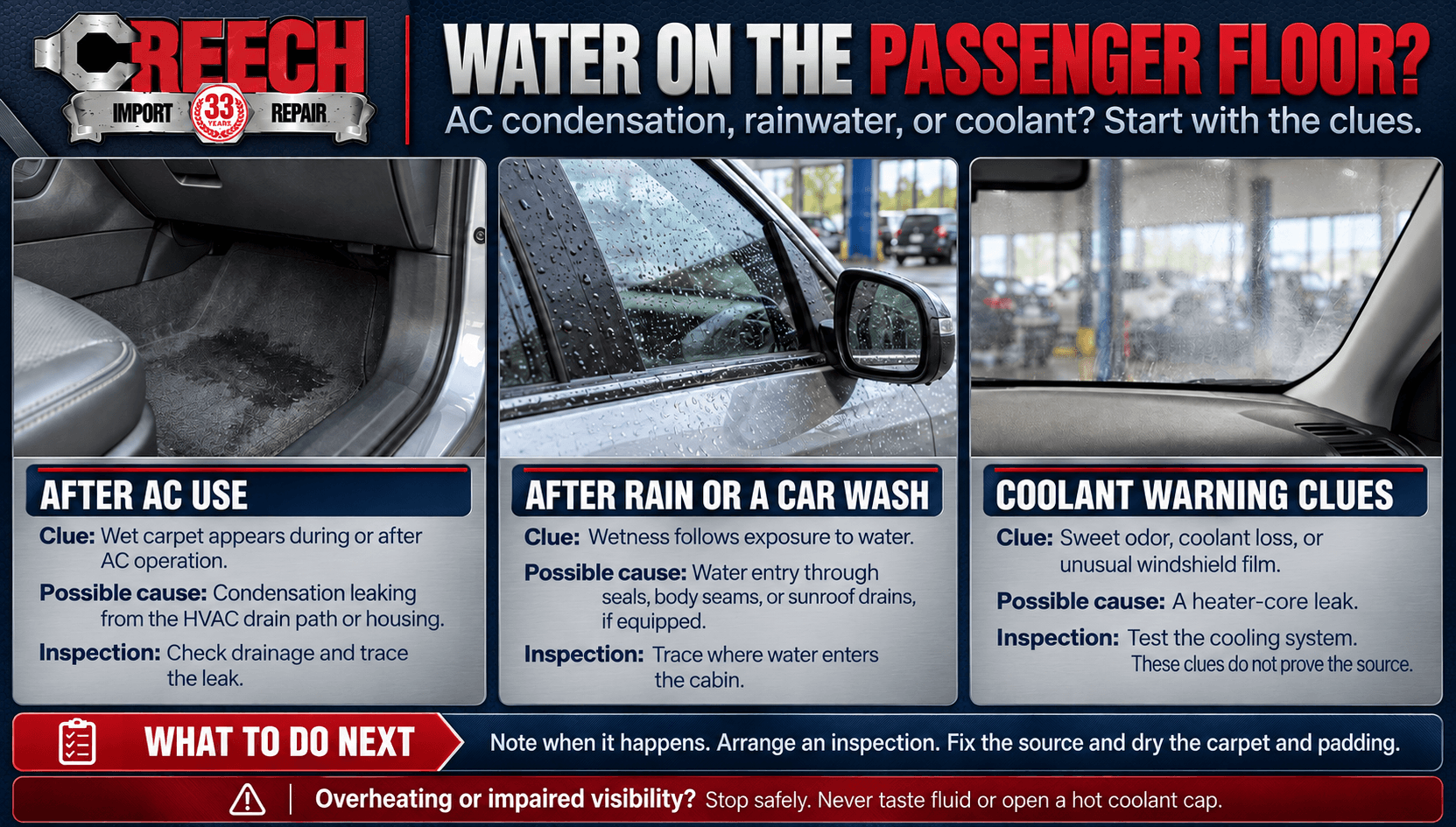
Timing and accompanying symptoms help guide inspection. Confirm the source before authorizing repairs, and address moisture in both the carpet and its padding.
Why does the passenger carpet get wet when the AC runs?
Your air conditioner removes moisture from cabin air as that air passes across the cold evaporator. The moisture becomes liquid water, which should leave through the vehicle’s condensation drainage system. It is different from the refrigerant sealed inside the AC circuit. Adding refrigerant does not repair a condensation drain leak.
If the drain is restricted, a connection has separated, or water escapes around the intended route, condensation may reach the interior. The correct access point and repair depend on the vehicle. Some faults involve blockage; others involve positioning or sealing. Treating every wet footwell as a clogged hose can miss the actual problem.
Cold air from the vents does not rule out a drain problem
An AC system can cool the cabin while its condensation drains incorrectly. Cooling performance and water disposal are related parts of HVAC operation, but successful cooling does not prove the drain is working. A passenger may notice wet shoes or carpet before the driver notices any change at the vents.
Likewise, a musty odor can accompany retained moisture without identifying its source. Rain-soaked padding can smell musty too. Report whether the odor began with the wetness, whether the blower changes it, and whether it persists when the vehicle has not been using the AC.
Why a puddle underneath is different from water inside
Water dripping outside after AC operation can be normal condensation. Water collecting inside the cabin is not an intended result. However, seeing an outside drip does not establish that every part of the drainage system is sound, and failing to see one during a short observation does not establish a blockage.
Do not push wire into an unfamiliar opening or force compressed air through a guessed drain outlet. Hidden hoses, fittings, and the HVAC assembly vary by model. Ask for an inspection using the appropriate service procedure. If cooling is also poor, Creech’s guide to AC blowing warm air in Raleigh explains that separate symptom.
Manufacturer example: GM bulletin PI1299B describes incorrectly positioned or disconnected AC drain hoses on specified Cadillac ELR and Chevrolet Volt model years. This illustrates why drainage inspection includes connections, not just blockage. The bulletin does not establish that another vehicle has the same fault.
Why is the passenger floor wet after rain or a car wash?
Wetness that repeatedly follows exterior water exposure shifts attention toward the vehicle’s weather sealing and drainage. Potential inspection areas include windshield bonding, body seams, door water barriers, cowl drainage, and sunroof drains where fitted. Which areas deserve testing first depends on the moisture pattern and the vehicle’s construction.
Water can travel behind trim before reaching the carpet. A dry-looking dashboard does not exclude a leak higher in the body, and moisture near the glovebox does not automatically mean the AC caused it. The visible wet patch may be the collection point rather than the opening through which water entered.
Door seals are only one part of managing water
A door has more than an outer weatherstrip. Depending on its design, water entering the door’s exterior cavity is directed through drainage paths, while an internal barrier keeps it away from the cabin. An intact-looking weatherstrip therefore does not rule out a problem elsewhere in the door assembly.
Tell the technician about recent window, speaker, door-lock, or body work. That history can help prioritize inspection, but it does not prove the work caused the leak. Replacing every door seal without reproducing the water entry may add expense while leaving the underlying path unchanged.
Sunroof and cowl drainage require vehicle-specific checks
Some sunroof assemblies manage water with channels and tubes. A connection problem or restriction can redirect water into the body. Vehicles without a sunroof obviously need a different investigation. A manufacturer communication archived by NHTSA describes checking a front sunroof drain connection for a passenger-floor water complaint and verifying the repair with a water test.
The cowl area near the windshield also deserves attention when the evidence points there. Accessible leaves or debris are worth noting, but removing them does not prove the leak is solved. Avoid high-pressure spraying into openings to investigate. A controlled test is more useful because it allows the entry point to be isolated.
Parking angle, rainfall duration, and washing direction can affect whether a leak appears. Include those details if you have noticed a repeatable pattern. A car that stays dry during a brief shower may still leak during sustained rain. Ask the shop whether the suspected repair falls within its services or requires a glass or body specialist.
Water on Passenger Floor: Could It Be Coolant?
On many vehicles with coolant-based cabin heating, the heater core transfers heat from engine coolant to air moving through the HVAC assembly. A leak from the core or its connections can release coolant near that assembly. The heater core is separate from the evaporator, even though both relate to cabin climate control.
A sweet odor, unexplained coolant loss, unusual windshield film, or wet carpet near the heater housing makes a coolant investigation important. Those observations should be considered together. A sweet smell alone can have other explanations, and general cabin fogging can come from plain water trapped in the interior.
Never identify coolant by tasting it
Do not taste liquid, deliberately inhale vapors, or assume fluid color proves its identity. Keep children and pets away from unknown liquid and contaminated materials. Never open a radiator or pressurized coolant reservoir cap while the system is hot.
Coolant colors vary, and liquid changes appearance when mixed with dirt, carpet dyes, or previous spills. A clear-looking wet patch does not safely exclude coolant. Equally, a colored stain does not confirm a heater-core failure. Inspection should establish both what the liquid is and where it is escaping.
If the owner’s manual allows an external reservoir-level check, observe it only under the specified conditions with the engine fully cool. Do not open a hot system to investigate a low reading. Record a warning or visible change and ask for guidance. Repeatedly adding fluid can hide a continuing loss without repairing it.
Turning the temperature control to cold does not reliably isolate the heater core. Coolant routing and heater valves differ among vehicles. Do not use that setting as permission to keep driving with an unresolved leak. The presence or absence of warm air is another symptom to report, not a conclusive leak test.
For these concerns, Creech’s cooling system repair services in Raleigh include coolant leak detection, pressure testing, and heater-core diagnosis. Describe any falling coolant level or temperature warning when arranging service so the team can advise on the next step.
Can you drive with a wet passenger floor?
A wet carpet alone does not tell you whether a trip is safe. Assess the warning signs, the amount of liquid, and whether the moisture affects visibility or vehicle operation. A minor known spill is different from unidentified liquid arriving with a temperature warning. When the source is uncertain, contact the shop before continuing normal use.
Stop safely and seek assistance if:
- The temperature gauge rises abnormally or an overheating warning appears.
- Steam or a significant ongoing coolant leak is evident.
- The windshield will not clear enough for safe visibility.
- Water intrusion accompanies electrical malfunction, smoke, or a burning smell.
- The vehicle has been flooded rather than affected by a small localized leak.
Do not keep driving while watching a rising temperature gauge in the hope that it settles. Move to a safe location, switch off as directed by your vehicle’s instructions, and arrange help. A normal gauge at one moment does not confirm that an unresolved coolant leak is harmless.
Moisture can affect wiring or modules depending on their location and the extent of the leak. Do not unplug wet connectors or attempt to reset a warning by disconnecting the battery. In a hybrid or electric vehicle, leave high-voltage components and orange cables alone. Report water exposure so inspection can account for the vehicle’s systems.
How does a technician find the actual leak source?
Useful diagnosis connects the complaint to a repeatable event and a visible or measurable leak path. It starts with your history, then moves to targeted checks. A drain-clearing attempt or replacement heater core should follow evidence that points to that repair, rather than a general assumption about wet passenger carpet.
1. Establish the extent of the moisture
The technician may inspect accessible carpet, padding, trim, and nearby areas to determine where liquid is collecting. Moisture underneath can extend beyond the obvious stain. The findings help decide whether additional access is needed and whether water-sensitive components should be examined.
2. Test the system that matches the pattern
For an AC-related complaint, inspection may compare normal condensation drainage with evidence of interior leakage. For rainwater, a controlled exterior water test can isolate one area at a time. For suspected coolant, appropriate cooling-system testing and inspection can distinguish an interior leak from an external one.
A pressure change alone does not identify the heater core. The technician still needs to locate the loss and account for test conditions. Similarly, water seen near an HVAC housing during a rain test should not automatically be called AC condensation. The test conditions are part of the evidence.
3. Check relevant vehicle information
Service information and applicable manufacturer bulletins can explain a model’s drainage layout or known inspection points. Applicability matters: year, model, equipment, and sometimes production range change the procedure. A bulletin found online is a useful lead, not proof that your vehicle has the described condition.
4. Verify the repair under comparable conditions
After repair, the original trigger should be checked again when practical. That may mean observing AC drainage or repeating a controlled water test. A dry surface immediately after towels were used is insufficient verification. The follow-up should establish that new liquid is no longer reaching the cabin.
Why drying the carpet surface is not enough
Carpet can feel dry on top while its backing or padding remains damp. A floor mat can conceal that moisture, and repeated leaks can replenish it. If the interior still smells musty after the surface dries, retained moisture or continued water entry needs attention; fragrance does not address either cause.
Recovery has two parts: stopping the incoming liquid and treating the affected materials. Depending on saturation, access, and contamination, that may involve extraction, controlled drying, cleaning, or replacement of damaged padding. Ask who will perform each part of the work. Leak repair and interior restoration may be separate services.
For a small, confirmed clean-water spill, remove loose wet items and blot accessible moisture. Keep towels and equipment clear of pedals and moving seat parts. Unidentified fluid, suspected coolant, extensive saturation, or floodwater deserves professional advice before you start cleaning. Do not use an ordinary dry-only vacuum to collect liquid.
Avoid dismantling seats or trim to speed drying unless you have the correct training and procedure. Seats may include restraint-system wiring, sensors, or other components. A warm afternoon with the windows open may help surface evaporation, but it does not confirm that hidden padding has dried or that an active leak has ended.
What determines the repair scope and cost?
There is no reliable single price for water on the passenger floor because the symptom can come from very different systems. An accessible hose issue, an intermittent body leak, and a heater core requiring substantial dashboard access are different jobs. Interior drying can add a separate layer of work.
Cost depends on time needed to reproduce the problem, access to the source, parts or sealing materials required, and the extent of wet-material recovery. A leak that occurs only after prolonged rain may take more investigation than a visible drip. Ask for an estimate based on confirmed findings rather than a generic symptom price.
Questions to ask before authorizing work
- What evidence identifies the source, and can it be shown or explained?
- Does the estimate include diagnosis, repair, drying, and verification?
- Are any carpet materials or electrical components affected?
- Will glass, body, or interior-restoration work need a specialist?
- What should I monitor after collecting the vehicle?
Replacing parts without identifying the entry route can leave you paying twice. Cleaning the interior before addressing the source can lead to another wet carpet after the next trigger. A clear estimate should explain the fault, the proposed repair, and what remains to be assessed.
How can you reduce repeat passenger-floor moisture?
Check under floor mats occasionally, especially after noticing a leak, a spill, or new cabin odors. Address recurring dampness early rather than waiting for a large puddle. Reporting the pattern while it is fresh also makes it easier to connect the complaint with weather or HVAC operation.
Follow vehicle-specific maintenance guidance for seals and drainage areas. Keep accessible exterior debris from accumulating without forcing tools into hidden drains. After windshield, door, or body work, pay attention to new wetness during ordinary rain exposure. Report changes promptly so they can be investigated.
Keep a short record after a repair: weather, AC use, whether the carpet stayed dry, and any returning odor or warning. One dry trip is encouraging, but the most useful check matches the conditions that previously produced the leak. If moisture returns, bring that record rather than assuming the same part failed again.
Arrange wet passenger-floor inspection in Raleigh
Creech Import Repair’s published auto AC repair services in Raleigh include AC drain inspection. When booking, explain whether the moisture follows AC use, rain, washing, or coolant-related symptoms. The service team can help determine the appropriate diagnostic appointment and discuss the vehicle and suspected repair scope.
Service takes place at the shop. If evidence points toward windshield bonding, body sealing, or specialized interior restoration, ask which work can be handled there and which may need another specialist. If the vehicle is overheating or unsafe to see out of, arrange assistance rather than driving it to an appointment.
Get the moisture source checked before it returns
Creech Import Repair
1818 St. Albans Dr #106, Raleigh, NC 27609
Monday–Friday, 7:30 a.m.–5:30 p.m.
Call 919-872-1999 or request an appointment online.
Online bookings are not confirmed until verified by a member of the Service Team.
Water on Passenger Floor: Frequently Asked Questions
Why is only the passenger floor wet?
The passenger footwell may collect liquid from nearby HVAC components or a water-entry path on that side of the vehicle. Water can also travel beneath trim or through padding. One wet footwell helps locate the affected area, but it does not identify the failed component or rule out moisture elsewhere.
Can a blocked AC drain cause wet passenger carpet?
Yes. A restriction can prevent condensation from leaving through its intended route. Disconnected, misrouted, or poorly sealed drainage components can also cause interior leakage. A technician should inspect the vehicle’s actual drainage layout instead of assuming that blockage is the only explanation.
Can the AC still blow cold while water leaks inside?
Yes. The AC can cool air while condensation drains incorrectly. Cold vent air does not prove the drain is sound. Adding refrigerant is not a repair for a condensation drainage problem; cooling performance and the moisture leak should be evaluated according to the symptoms present.
Why does the passenger carpet get wet after rain?
Rain-related wetness suggests exterior water entry. Depending on the vehicle, inspection may include windshield bonding, door barriers, body seams, cowl drainage, or sunroof drains. A controlled water test helps trace the route. The wet spot may be some distance from the actual entry point.
Does a sweet smell mean the heater core is leaking?
A sweet odor raises concern about coolant, especially with coolant loss, wet carpet, or unusual windshield film. It does not confirm a heater-core leak by itself. Fluid identification and cooling-system testing are needed to distinguish an interior leak from other causes. Never taste fluid to identify it.
Can a heater core leak when the heat is turned off?
It can, depending on the vehicle’s coolant routing and heater-control design. Turning the cabin temperature setting to cold does not reliably stop coolant reaching the heater core. Do not use that setting to rule out a leak or justify continued driving with overheating or unresolved coolant loss.
Is water dripping under the car after AC use normal?
It can be normal condensation draining outside. Liquid collecting on the passenger carpet is different and needs investigation. An outside drip does not prove that every drainage connection is sound, and absence of a visible drip during a short observation does not prove a blockage.
Will towels and open windows solve wet carpet?
They may remove some surface moisture, but padding can remain wet underneath. Drying also does not repair an active leak. The appropriate recovery depends on the liquid, saturation, and affected materials. Unidentified fluid, suspected coolant, or extensive water exposure should be assessed before cleaning.
How much does a wet passenger-floor repair cost?
The cost depends on the source, diagnostic time, access, parts, and interior recovery required. An accessible drain issue differs from a heater-core repair or body water leak. Request an estimate after inspection and ask whether it includes drying, specialist work, and verification of the repair.
Does Creech Import Repair inspect AC drains in Raleigh?
Yes. Creech lists AC drain inspection among its Raleigh auto AC services. Call 919-872-1999 or request an appointment for your vehicle. Describe the moisture pattern and any warnings. Confirm the repair scope with the Service Team, particularly if glass, body, or interior-restoration work may be needed.
Technical references and service information
Manufacturer documents below describe particular vehicles or systems. They support inspection principles and do not diagnose your vehicle or guarantee that a bulletin applies to it.
- GM bulletin PI1299B, archived by NHTSA: AC drain-hose positioning and passenger-floor moisture on specified models.
- FCA communication S2023000013, archived by NHTSA: sunroof drain connection inspection and water-test verification.
- Ford coolant-check guidance: precautions for hot, pressurized cooling systems. Follow your own vehicle’s manual.
- Creech Import Repair AC services and shop contact information.
- Creech Import Repair cooling system services: coolant leak detection, pressure testing, and heater-core diagnosis.
Find Creech Import Service articles useful?
Add this site to your Preferred Sources in Google Search.