location

1818 St. Albans Dr #106, Raleigh, NC 27609

phone

Need Help

919-872-1999
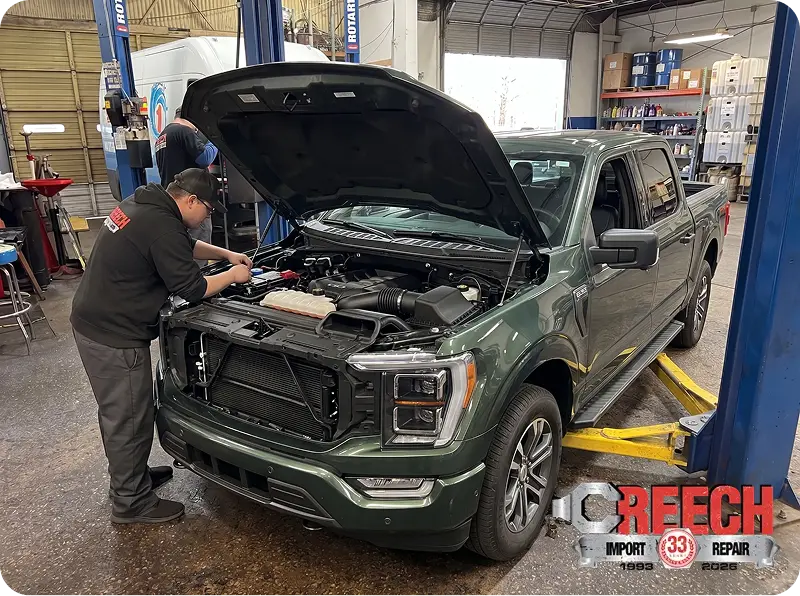
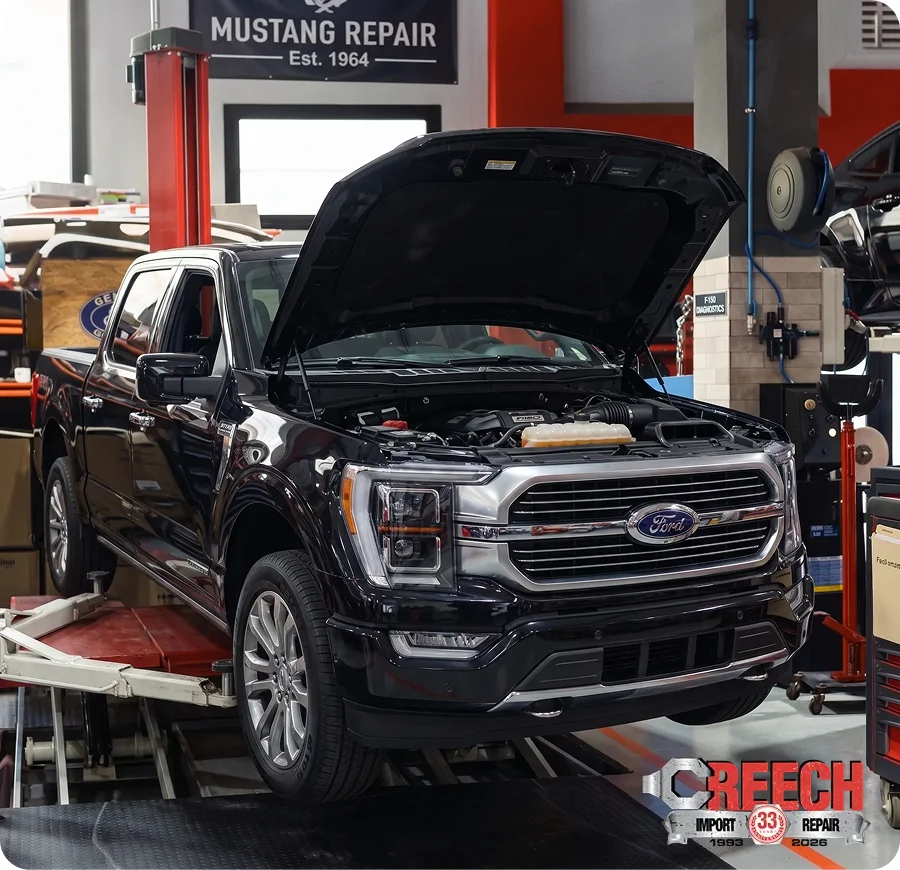
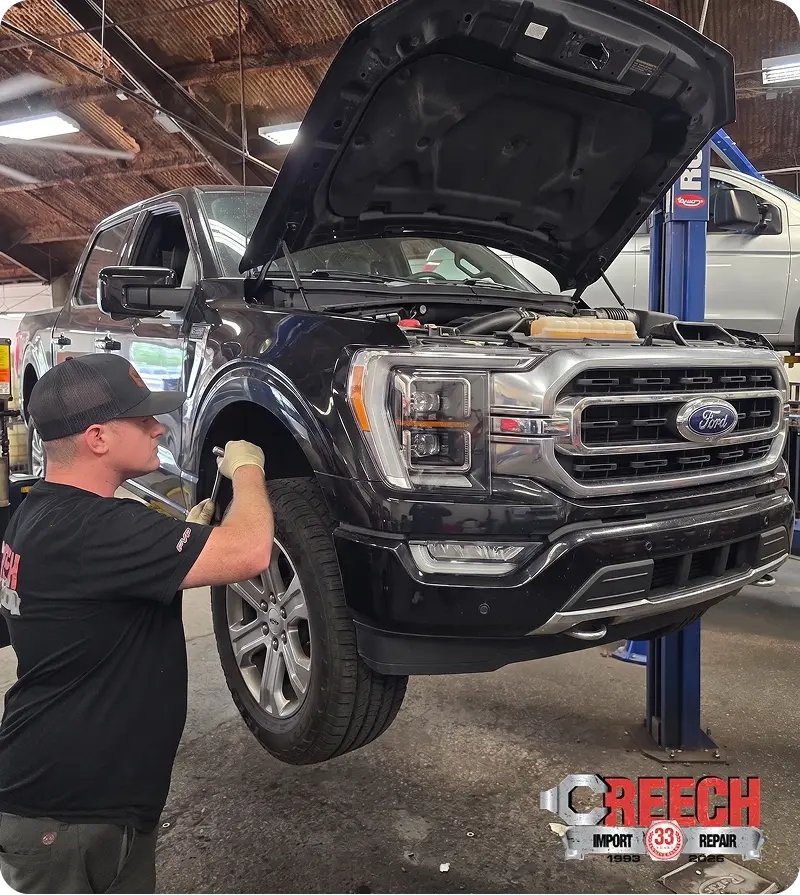
Ford F-150 Repair Raleigh NC

Ford F‑150 Repair & Maintenance— Raleigh, NC


  • Creech Import Repair: 1818 St. Albans Dr #106, Raleigh, NC 27609 • 919‑872‑1999
  • Hours:Mon–Fri, 7:30 am–5:30 pm
  • ASE‑Certified technicians
  • 3‑year/36,000‑mileparts & labor warranty.

Built to Work. Serviced to Last:
Whether your F‑150 is a 3.5L EcoBoost, 2.7L EcoBoost, 5.0L Coyote, 3.3L, or PowerBoost Hybrid, we use factory‑grade diagnostics, Motorcraft/OE‑quality parts, and documented test procedures to fix drivability, electrical, and shift concerns—backed by a 3‑year/36,000‑mile warranty. We follow Ford service information, TSBs (technical service bulletins), and recall guidance so repairs are accurate and defensible

What We Service on Ford F‑150 (VIN‑Verified Coverage)


    • Powertrains: 3.3L, 2.7L EB, 3.5L EB, 5.0L, PowerBoost hybrid (select services), legacy 5.4L 3‑valve
    • Transmissions: 6‑speed 6R80 and 10‑speed 10R80 (including MHT hybrid variants).
    • Systems:Engine, cooling, charging/starting, A/C, brakes/ABS, steering/suspension, 4×4 transfer case/diffs, electrical networks, ADAS calibrations (as applicable), and North Carolina inspections.

We verify availability by VIN at scheduling and will refer specialized HV battery/drive‑unit work to dedicated facilities when appropriate.
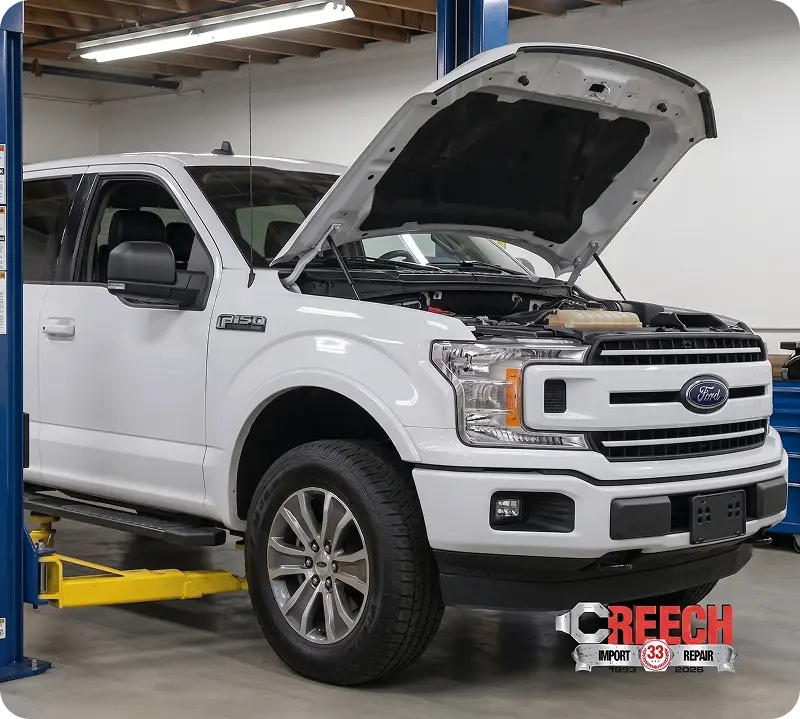
Ford F-150 Service Raleigh

Common F‑150 Issues We See (and How We Address Them)

These are patterns documented in Ford bulletins/industry data. We diagnose your truck by symptoms and test results—TSBs are guidance, not blanket fixes.

10‑Speed 10R80 Harsh/Delayed Shifts or Engagement
  • Symptoms: Harsh 1–2/2–3, flare, delayed D/R, occasional MIL with solenoid‑related DTCs.
  • Context: Ford issued TSBs covering 10R60/10R80/10R80 MHT for harsh/delayed engagement/shift on vehicles built through Dec 23, 2022, later expanded with updated procedures (e.g., 23‑2351, 24‑2101, 24‑2070). Procedures include software updates and the PCM – Transmission Accelerated Main Control Break‑In routine.
  • Our approach: Confirm with a full scan, fluid condition check, road‑test data logs (turbine/OSS speeds, clutch slip), apply Ford procedures (software/BREAK‑IN routine), and adaptives relearn per Workshop Manual
Sudden Downshift on Certain 6‑Speed (6R80) Models
  • Symptoms: Unexpected downshift at highway speed, sometimes with temporary rear‑wheel lock.
  • Context: NHTSA opened a 2025 investigation into 2015–2017 F‑150 for unexpected downshifts; earlier campaigns addressed similar behavior on other years. We check your VIN for any open actions and software updates
3.5L EcoBoost Primary Timing Chain Wear (Early Build Years)
  • Symptoms: Cold‑start rattle, P0016 cam/crank correlation faults, drivability concerns.
  • Context: TSB 17‑0026 covers 2011–2014 F‑150 3.5L GTDI for timing chain wear with defined diagnostics and service parts.
  • Our approach: Oil‑system checks, correlation tests, borescope where indicated, and factory‑procedure chain service when confirmed.
2018–2020 5.0L Coyote Oil Consumption
  • Symptoms: Excess oil use between changes with no visible leaks.
  • Context: SB 19‑2365 (superseding 19‑2338) details verification and repair criteria for 2018–2020 F‑150 5.0L excessive consumption
  • Our approach: Documented consumption testing per Ford guidance; ring/cylinder‑related service only after thresholds are met.
2011–2012 EcoBoost Intercooler Condensation (Humidity‑Related Misfire)
  • Symptoms: Stumble/misfire under hard accel after long humid highway drive.
  • Context: TSB 13‑8‑1 outlines PCM updates and an intercooler shield/parts to mitigate moisture buildup.
Legacy 5.4L 3‑Valve Spark Plug Removal & Cam Phaser Noise
  • Symptoms: Spark plugs seize/break during removal; variable cam timing knock/“phaser” rattle.
  • Context: TSB 08‑7‑6 details the plug removal procedure for 2004–2008 5.4L/4.6L/6.8L 3‑valve engines to reduce breakage risk; separate Ford guidance covers cam phaser diagnosis/repair.
Aluminum Body Panel Corrosion (Paint Bubbling/White Dust)
  • Context: Ford issued aluminum corrosion bulletins (19‑2026, superseded by 20‑2233) covering many models/years—including F‑150—with repair refinishing procedures.
Selected Recalls to Know (VIN‑Specific)
  • 2021–2022: 21S56 / 21V986: underbody insulators may contact the aluminum driveshaft; inspection and securement required on certain configurations
  • 2021–2025 (various models incl. F‑150): Rear‑view camera software—APIM update for delayed/frozen/blank images. Check your VIN for eligibility and remedy Recall work must be completed by a franchised Ford dealer. We’ll identify open recalls at check‑in and coordinate your next steps. For real‑time status, use the NHTSA VIN lookup and Ford Recall tools.

What You Can Do to Help (Before Your Appointment)

Make the problem “repeatable” on paper.

  • Document conditions when symptoms occur: speed, throttle, gear, engine temp, outside temp, humidity, towing/loads, 4×4 mode.
  • Don’t clear codes before we scan; saved freeze‑frame data is valuable.
  • Capture short videos of the cluster (tach/speed) and the noise/behavior when safe.

Bring context.

  • Maintenance records (oil type/brand/interval, spark plugs/ignition dates, coolant and transmission services).
  • Mod list(tuners, lifts, tire size, axle ratio changes, aftermarket intercooler/air intake, exhaust). These can affect shift strategy, fueling, and diagnostics.

Quick checks owners can perform (no tools):
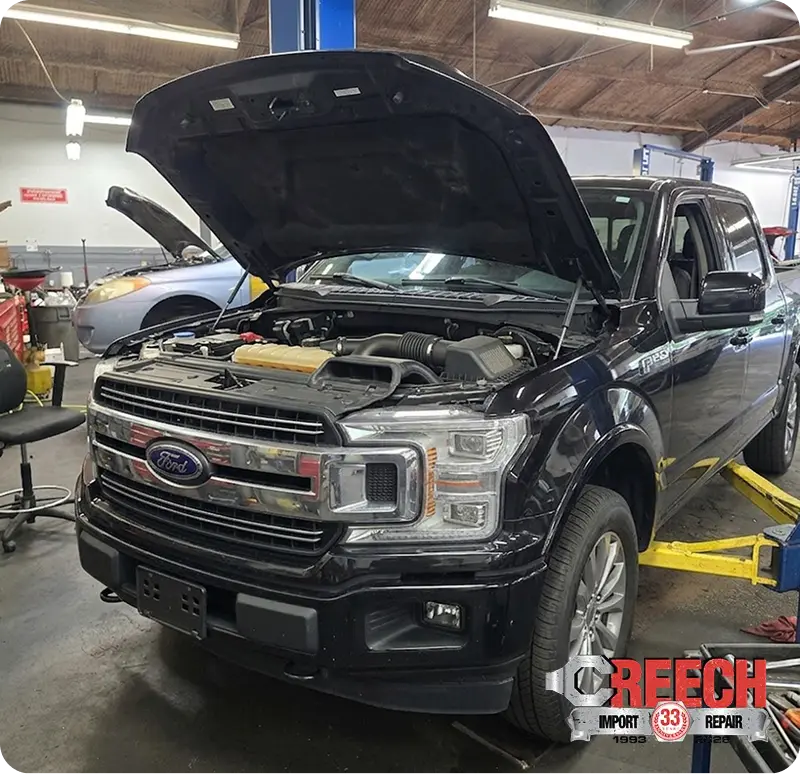
  • Oil level (park level, cold check) and note consumption trend if applicable to 2018–2020 5.0L (we’ll run a formal test per TSB)
  • Cooling system: watch for repeated P0128 messages or slow warm‑up; note heater performance.
  • 10‑speed shift quality:after a battery disconnect or module update, mild roughness can happen during adaptive relearn—don’t mask it; just note when it happens so we can apply the Break‑In/WSM procedure correctly.
  • Recall status: check your VIN before arriving (we’ll verify as well)
Understanding Alignment

Preventive Maintenance for Raleigh‑Area Ford F‑150s


  • Oil & filter: Follow your Intelligent Oil‑Life Monitor (IOLM) or annual service—whichever comes first; severe use (towing, short trips, dust) may shorten intervals. We reset and document IOLM after service.
  • Transmission & driveline: We recommend a usage‑based strategy (towing, heat, stop‑and‑go) and verify against the Owner’s Manual. Evidence‑based fluid service can improve shift quality on 10R80 and extend component life—our techs use scan‑tool temps and fluid condition as part of the decision.
  • Cooling system: Heat + humidity increase demand; we test coolant concentration and thermostat performance as trucks age.
  • Brakes & tires: Triangle traffic and loads accelerate wear; we measure pad thickness/rotor condition and check tire wear patterns to protect handling and stopping distances.
  • 4×4 system: Inspect transfer case/front & rear differentials for leaks/fluid condition—especially after water crossings, off‑road trips, or plowing/towing seasons.

F‑150 Trouble Codes We Often See (Examples)

Code Meaning Notes
P0016 Crank/Cam correlation (Bank 1, Sensor A) Correlation faults on early 3.5L EcoBoost may indicate chain wear; verify oil supply and perform mechanical correlation checks.
P0299 Turbo underboost Intercooler/charge plumbing, wastegate control, and TIP/boost rationality tests—especially on EcoBoost engines
P0300 Random/multiple misfire Rule out ignition, fuel delivery, and intercooler condensation scenarios (see TSB 13‑8‑1).
P0751/P0752/P0771 (varies) Shift solenoid performance On 10R80, check for related TSBs and perform the Main Control Break‑In routine and adaptive drive cycle per WSM.

Our Diagnostic Process (Built for Trucks That Work)


  • Interview & road test to reproduce the concern and capture live data.
  • VIN‑specific check for TSBs, recalls, and calibration updates.
  • Data analysis (fuel trims, VCT angles, misfire counters, boost/TIP, turbine/OSS, clutch slip, temperatures).
  • Estimate & options with Motorcraft/OE‑quality parts.
  • Validation drive and documented results (readiness monitors, IOLM reset, adaptation status).
Ford F-150 Maintenance Raleigh

FAQs (Ford F‑150‑Specific)

Yes. We use Ford’s current procedures (software updates plus the Main Control Break‑In routine) and complete the adaptive relearn per the Workshop Manual.

Don’t top off blindly—log miles and quantity. We’ll run Ford’s documented consumption test and proceed per TSB 19‑2365 if thresholds are met.

The issue is under NHTSA investigation as of March 2025. Use the VIN tools to check your truck; we’ll verify status at check‑in and perform any required software updates/diagnostics.

Routine maintenance performed here does not void your factory warranty; recall work is dealer‑only. (We’ll identify open recalls and coordinate.)
Contact us today

For an estimate with the most trusted auto repair shop in Wake County, Creech Import Repair!

location
Shop Location
1818 St. Albans Dr #106
Raleigh, NC 27609
time
Monday - Friday
7:30 am - 5:30 pm
phone
Call us 919-872-1999
Our Commitment to You

At Creech Import Repair, our philosophy is simple: Treat customers with kindness, respect, and honesty, and success will follow. Contact us for any and all of your automotive repair needs.

Please Note
  • Online bookings are not considered confirmed appointments until verified by a member of our Service Team.
  • We take your privacy very seriously. Learn more about how we protect your information by reading our Privacy Policy.
google map
now-hiring