


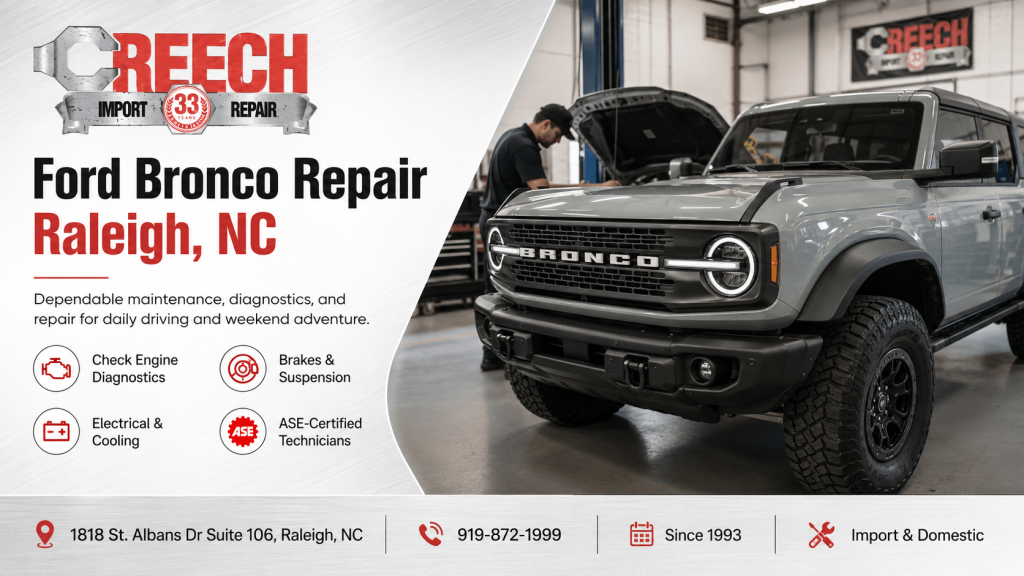
Ford Bronco Repair Raleigh NC: Signs, Maintenance, Costs, and What Drivers Should Know
Ford Bronco repair Raleigh NC drivers can trust starts with honest diagnostics, clear communication, and a shop that understands how daily driving, weekend adventure, traffic, heat, mud, rain, and rough roads affect a Bronco over time. Whether you drive a Bronco Sport, a 2.3L EcoBoost Bronco, a 2.7L EcoBoost Bronco, a manual Bronco, an automatic Bronco, or a trail-ready trim with off-road features, the goal is the same: keep the vehicle dependable, safe, and ready for how you actually use it.
The Ford Bronco is built for capability, but capability does not mean it should be ignored between repairs. Broncos still need oil changes, brake service, tire care, suspension checks, electrical diagnostics, cooling-system maintenance, transmission service, and regular inspections. Off-road driving, towing, potholes, curbs, heavy rain, and Raleigh stop-and-go traffic can all change how the vehicle wears.
At Creech Import Repair, Raleigh drivers can schedule Ford Bronco repair and maintenance at 1818 St. Albans Dr Suite 106, Raleigh, NC 27609. Creech Import Repair has served local drivers since 1993 with a customer-first approach built around honest diagnostics, ASE-certified technicians, clear communication, and no-surprise repair recommendations.
Creech Import Repair specializes in Asian vehicles and also services many domestic configurations, including many Bronco and Bronco Sport models. Because Bronco coverage can depend on year, engine, drivetrain, and repair scope, drivers should call ahead at (919) 872-1999 to confirm service fit and schedule the right appointment.
What Is Ford Bronco Repair?
Ford Bronco repair is the inspection, diagnosis, maintenance, and repair of systems that keep a Bronco safe, reliable, and performing correctly. This may include engine diagnostics, brake repair, suspension service, drivetrain inspection, oil changes, electrical testing, AC repair, tire service, cooling-system work, and scheduled maintenance.
A Ford Bronco is more than a commuter SUV. Many owners use it for daily driving during the week and outdoor driving on the weekend. That means the repair process should consider both normal maintenance and the extra wear that can come from off-road capability, larger tires, four-wheel-drive use, and heavier-duty suspension components.
Ford Bronco repair may include:
- Check engine light diagnostics
- Oil and filter service
- Brake inspection and repair
- Tire rotation and tire wear inspection
- Suspension inspection
- Steering and alignment checks
- Cooling-system inspection
- Battery and alternator testing
- Electrical diagnostics
- Transmission or drivetrain evaluation
- Turbocharged engine performance checks
- AC and heating system service
- Leak inspection
- Scheduled maintenance review
- Recall and service information discussion when appropriate
The right repair starts with testing, not guessing. A symptom may feel obvious from the driver’s seat, but the actual cause may involve electronics, sensors, software, drivetrain components, tire wear, suspension, or basic maintenance.
Why Ford Bronco Maintenance Matters in Raleigh
Ford Bronco maintenance matters because Raleigh driving can be harder on SUVs than many owners realize. Potholes, heat, humidity, stop-and-go commuting, heavy rain, gravel roads, trail use, and larger tires can all affect brakes, steering, suspension, cooling, fluids, and drivetrain components.
Bronco owners in Raleigh, Cary, Apex, Wake Forest, Knightdale, Garner, Morrisville, North Raleigh, and the Triangle often use their vehicles for several purposes. One week the Bronco may be handling school pickup, downtown parking, and I-440 traffic. The next weekend it may be carrying gear, bikes, pets, passengers, or heading toward rougher roads.
Regular maintenance helps:
- Protect engine performance
- Reduce unexpected repair surprises
- Support brake safety
- Extend tire life
- Keep suspension components working properly
- Catch leaks early
- Protect drivetrain components
- Improve steering feel
- Support AC and electrical reliability
- Keep the Bronco ready for daily and weekend use
A Bronco does not need dramatic symptoms to benefit from maintenance. Small changes in steering feel, tire wear, braking, noises, or warning lights can be early signs that something deserves attention.
Signs You Need Ford Bronco Repair in Raleigh NC
You may need Ford Bronco repair in Raleigh NC if your Bronco has a check engine light, rough shifting, steering pull, brake noise, uneven tire wear, suspension clunks, overheating, weak AC, battery problems, fluid leaks, vibration, reduced power, or unusual noises after off-road driving.
Common warning signs include:
- Check engine light
- Rough idle
- Reduced acceleration
- Turbo-related hesitation
- Hard start or no-start condition
- Battery warning light
- Brake squealing or grinding
- Steering pull
- Crooked steering wheel
- Vibration at highway speed
- Uneven tire wear
- Suspension clunking
- Leaks under the vehicle
- Overheating
- Burning smell
- AC blowing warm air
- Transmission hesitation
- Four-wheel-drive warning messages
- Unusual noise after trail use
- Tire pressure warning light
Some symptoms are urgent. Others are maintenance clues. A flashing check engine light, overheating, brake grinding, strong burning smell, severe steering looseness, or major leak should be inspected promptly.
Ford Bronco Symptoms vs. Possible Repairs
Ford Bronco symptoms can overlap across systems. A vibration may be a tire issue, wheel balance concern, suspension problem, drivetrain issue, or alignment concern. A warning light may involve sensors, wiring, emissions, fuel, ignition, or engine performance. Diagnostics help confirm the cause.
| Driver Symptom | Possible Cause | What the Shop May Check |
|---|---|---|
| Check engine light | Sensor, emissions, misfire, fuel trim, turbo, EVAP, wiring | Scan data, codes, live data, smoke test, functional tests |
| Brake noise | Worn pads, rotors, caliper issue, debris, parking brake concern | Pads, rotors, calipers, brake fluid, hardware |
| Steering pull | Alignment, tire pressure, tire wear, suspension, brake drag | Tires, alignment, suspension, brakes |
| Clunk over bumps | Sway links, bushings, shocks, struts, ball joints, mounts | Steering and suspension inspection |
| Vibration at speed | Tire balance, tire wear, wheel damage, drivetrain issue | Tires, wheels, suspension, road test |
| Hard start | Battery, starter, fuel, ignition, sensor, wiring | Battery test, charging test, starter and electrical checks |
| Overheating | Coolant leak, thermostat, fan, water pump, radiator issue | Cooling-system pressure test and temperature data |
| Rough shifting | Transmission fluid, software, sensor, drivetrain, internal wear | Road test, scan data, fluid inspection when applicable |
This table is a guide, not a diagnosis. A trustworthy shop should inspect the vehicle, explain the findings, and recommend the right next step before parts are replaced.
Common Ford Bronco Repair Needs
Common Ford Bronco repair needs may include brake service, tire and alignment work, suspension repair, electrical diagnostics, oil leak inspection, check engine light diagnostics, cooling-system service, AC repair, drivetrain evaluation, and scheduled maintenance.
Broncos can see different wear patterns depending on how they are driven. A Bronco Sport used mostly for commuting may have different needs than a Bronco with larger tires, trail use, towing, or frequent weekend driving.
Common service areas include:
- Engine performance diagnostics
- Brake repair
- Tire rotation and replacement support
- Wheel alignment
- Suspension inspection
- Battery and charging-system testing
- Starter and alternator checks
- AC repair
- Cooling-system service
- Transmission and drivetrain evaluation
- Four-wheel-drive system concerns
- Oil changes
- Fluid leak checks
- Belt and hose inspection
- Manufacturer-recommended maintenance
Good repair planning separates routine maintenance from diagnostic work and larger repairs. That helps drivers understand what matters now and what can be monitored.
Check Engine Light on a Ford Bronco
A check engine light on a Ford Bronco can involve emissions, ignition, fuel, turbocharger performance, EVAP leaks, oxygen sensors, mass airflow data, misfires, wiring, or control-module information. The code points to a system, but testing confirms the cause.
A code scan is only the start. Replacing the part named in a code description can lead to wasted money if the issue is actually wiring, vacuum leaks, fuel trim, software data, or another system affecting the sensor reading.
Check engine light diagnosis may include:
- Code scan
- Freeze-frame data review
- Live data review
- Misfire data
- Fuel trim analysis
- EVAP testing
- Smoke testing when needed
- Sensor testing
- Wiring checks
- Road testing
- Verification after repair
Drivers can review Creech Import Repair’s check engine light service page for related diagnostic support.
Brake Repair for Ford Bronco Models
Brake repair for a Ford Bronco may include pad replacement, rotor service, caliper inspection, brake fluid checks, parking brake inspection, hardware review, and road testing. Brake symptoms should be inspected early because larger tires, extra weight, traffic, and trail use can all increase brake demand.
Schedule brake service if you notice:
- Squealing
- Grinding
- Vibration while braking
- Longer stopping distance
- Brake warning light
- Soft brake pedal
- Pulling while braking
- Burning smell after braking
- Brake dust increase
- Parking brake concern
Creech Import Repair offers brake repair service as part of its full-service auto repair options. A brake inspection can help determine whether the Bronco needs pads, rotors, fluid service, caliper work, or another repair.
Suspension, Steering, and Alignment on a Ford Bronco
Suspension, steering, and alignment are important on a Ford Bronco because the vehicle’s height, tire size, off-road capability, and daily road impacts can all affect handling and tire wear. Pulling, clunking, wandering, or uneven tire wear should be inspected.
Bronco suspension and steering concerns may include:
- Clunking over bumps
- Steering looseness
- Pulling to one side
- Crooked steering wheel
- Uneven tire wear
- Wandering on the highway
- Vibration
- Noise after trail use
- Worn bushings
- Ball joint wear
- Tie rod wear
- Shock or strut concerns
Drivers can also review Creech Import Repair’s wheel alignment service page if the Bronco pulls, wanders, or wears tires unevenly.
Ford Bronco Tire Wear and Tire Maintenance
Tire maintenance matters on a Ford Bronco because tires affect braking, steering, four-wheel-drive performance, traction, fuel economy, and ride comfort. Uneven tire wear can point to alignment, suspension, tire pressure, rotation, or driving-condition issues.
Bronco owners should watch for:
- Inner-edge wear
- Outer-edge wear
- Feathered tread
- Cupping
- Vibration
- One tire wearing faster
- Tire pressure warning light
- Cracks or bulges
- Uneven tread depth
- Noise after tire rotation
- Poor wet-road traction
NHTSA recommends checking tires and tire pressure because tire condition affects vehicle safety. Drivers should also check for open tire or vehicle recalls through the official NHTSA recall lookup when appropriate.
Ford Bronco Battery, Alternator, and Electrical Problems
Bronco electrical problems may involve the battery, alternator, starter, wiring, fuses, sensors, modules, lights, charging system, or parasitic drain. Modern vehicles depend heavily on electronics, so electrical symptoms should be tested carefully instead of guessed at.
Common electrical warning signs include:
- Slow crank
- No-start condition
- Battery warning light
- Dim headlights
- Flickering dashboard lights
- Power windows acting strangely
- Infotainment glitches
- Repeated dead battery
- Blown fuses
- Warning messages
- Intermittent sensor faults
- Key or push-start issues
Creech Import Repair’s electrical system repair page explains that electrical repair can involve batteries, alternators, wiring, fuses, sensors, and other components. A proper diagnostic process helps prevent unnecessary parts replacement.
Cooling-System and Overheating Concerns
Ford Bronco cooling-system concerns should be inspected quickly because overheating can damage expensive engine components. Cooling problems may involve coolant leaks, radiator issues, water pump concerns, thermostat problems, cooling fan failures, hose leaks, or low coolant.
Schedule service if you notice:
- Temperature gauge rising
- Coolant smell
- Steam
- Coolant puddles
- Low coolant warning
- AC performance changing at idle
- Overheating in traffic
- Fan noise changes
- Burning smell
- Heater not working normally
An overheating Bronco should not be driven far without guidance. If the temperature warning appears, stop safely and call for advice.
Ford Bronco Maintenance Schedule Basics
Ford Bronco maintenance should follow the owner’s manual and Ford’s maintenance schedule for the specific year, engine, drivetrain, and usage. Maintenance timing can change if the Bronco is used for towing, off-road driving, dusty roads, short trips, or severe conditions.
Routine Bronco maintenance may include:
- Oil and filter changes
- Tire rotation
- Brake inspection
- Fluid checks
- Battery testing
- Air filter replacement
- Cabin filter replacement
- Belts and hoses inspection
- Cooling-system checks
- Transmission and drivetrain service when due
- Suspension and steering inspection
- Software or recall review when appropriate
- Spark plugs or ignition service when due
Ford’s owner resources and maintenance schedule tools can help drivers review factory guidance. A shop can then help translate that schedule into practical service timing based on the Bronco’s mileage and use.
Bronco Sport vs. Ford Bronco: Service Differences
Bronco Sport and Ford Bronco models are different vehicles with different platforms, drivetrains, components, and service needs. Both can be reliable when maintained well, but they should not be treated as identical during diagnosis or repair planning.
| Model Type | Common Use | Service Considerations |
|---|---|---|
| Bronco Sport | Commuting, light adventure, daily family use | Engine, AWD/4x4 systems, tires, brakes, electronics, cooling |
| Ford Bronco 2-door/4-door | Daily use, trail use, larger tires, stronger off-road focus | Suspension, drivetrain, tires, steering, brakes, engine, cooling |
| Sasquatch or off-road trims | Larger tires, more trail-focused setup | Tire wear, alignment, suspension inspection, drivetrain checks |
| High-mileage Bronco | Daily use plus accumulated wear | Leaks, fluids, suspension, brakes, sensors, battery, maintenance history |
Because configurations vary, Creech recommends calling to confirm year, engine, drivetrain, and service coverage before scheduling specialty Bronco repairs.
Ford Bronco Repair Cost Factors
Ford Bronco repair cost depends on the symptom, model year, engine, drivetrain, diagnostic time, parts needed, labor complexity, maintenance history, and whether the issue is routine, electrical, mechanical, drivetrain-related, or suspension-related.
Cost factors may include:
- Bronco vs. Bronco Sport configuration
- Engine type
- Drivetrain and 4x4 components
- Tire size and suspension setup
- Diagnostic time
- Parts availability
- OEM or quality replacement parts
- Labor access
- Whether the issue is intermittent
- Whether warning lights are present
- Whether previous repairs were attempted
- Whether additional wear is found during inspection
A trustworthy shop should not promise an exact repair cost before inspecting the vehicle. The right first step is to diagnose the concern and explain the repair options clearly.
How Long Does Ford Bronco Repair Take?
Ford Bronco repair time depends on the service. Routine maintenance, oil changes, inspections, and some brake services may be completed quickly depending on schedule, while diagnostics, electrical issues, suspension repairs, drivetrain concerns, and parts delays can take longer.
Typical timelines may look like this:
| Service Need | Typical Timeline |
|---|---|
| Oil change and routine inspection | Often same day depending on schedule |
| Brake inspection | Often same day depending on schedule |
| Check engine light diagnostics | Varies by symptom and testing required |
| Battery or charging-system test | Often same day depending on schedule |
| Suspension inspection | Often same day, repairs may take longer |
| Alignment check | Often about an hour if no repairs are needed |
| Electrical diagnosis | Varies depending on intermittent symptoms |
| Drivetrain or 4x4 concern | Depends on inspection, parts, and complexity |
Creech Import Repair may have loaner cars available for larger jobs when available, which can help drivers manage repairs without disrupting the week.
Is It Safe to Keep Driving a Ford Bronco With Warning Signs?
Whether it is safe to keep driving a Ford Bronco with warning signs depends on the symptom. Mild maintenance reminders may allow time to schedule service, but overheating, brake grinding, strong pulling, flashing check engine light, severe vibration, or fluid leaks should be handled promptly.
Do not ignore:
- Flashing check engine light
- Overheating
- Brake grinding
- Strong fuel smell
- Major coolant or oil leak
- Severe vibration
- Steering looseness
- Strong pulling
- Transmission slipping
- No-start condition
- Battery warning light while driving
- Tire damage or exposed cords
If the vehicle feels unsafe, call the shop before continuing to drive. Safety and diagnosis should come before convenience.
What to Do Before a Ford Bronco Repair Appointment
Before a Ford Bronco repair appointment, write down the symptom, when it happens, how long it has been happening, recent off-road driving, recent repairs, warning lights, mileage, and whether the problem changes with speed, braking, turning, heat, or weather.
Helpful details include:
- Current mileage
- Model year and trim
- Engine and drivetrain if known
- Warning lights
- Recent maintenance
- Recent tire replacement
- Recent pothole or curb impact
- Off-road or trail use
- Towing or heavy load history
- Fluid leaks
- Noises and when they happen
- Whether the problem is intermittent
- Whether codes were cleared elsewhere
- Any recall notices or service messages
The more specific the driver can be, the easier it is for the technician to reproduce the symptom and avoid guesswork.
How to Help Prevent Ford Bronco Problems
You can help prevent Ford Bronco problems by following the owner’s manual, changing fluids on schedule, rotating tires, checking tire pressure, inspecting suspension after rough driving, addressing warning lights early, and scheduling diagnostics before small symptoms become larger repairs.
Bronco maintenance tips include:
- Follow Ford maintenance guidance for your specific model
- Change oil on schedule
- Rotate tires regularly
- Check tire pressure, including the spare when applicable
- Inspect tires after off-road driving
- Wash mud and debris from underbody areas after trail use
- Check for fluid leaks
- Listen for new suspension noises
- Address warning lights early
- Check for open recalls by VIN
- Schedule alignment after major impacts
- Avoid ignoring overheating or brake symptoms
- Keep maintenance records
Good maintenance protects both daily reliability and weekend capability.
Why Choose Creech Import Repair for Ford Bronco Repair in Raleigh?
Creech Import Repair is a family-owned Raleigh auto repair shop serving drivers since 1993. The shop is known for customer-first service, honest diagnostics, ASE-certified technicians, import and domestic repair experience, and clear communication that helps drivers avoid surprises.
Drivers choose Creech Import Repair because they want:
- A Raleigh shop serving customers since 1993
- ASE-certified technicians
- Honest diagnostics
- Clear communication
- Domestic and import repair experience
- Many Ford Bronco and Bronco Sport configurations serviced
- Factory-grade diagnostics when applicable
- Motorcraft/OE-quality parts when appropriate
- Professional-grade equipment
- Help with routine and diagnostic repairs
- Repair recommendations without pressure
- Loaner cars available for larger jobs when available
- A customer-first experience
That matters because Bronco repairs can range from simple maintenance to more complex drivetrain, suspension, electrical, or engine concerns. Creech Import Repair helps drivers understand the problem before they approve repairs.
Real-World Ford Bronco Repair Scenarios
The Raleigh commuter with a check engine light
A Raleigh driver notices a check engine light during the workweek. The Bronco still feels normal, but inspection and renewal time are approaching. A diagnostic visit can review codes, live data, emissions readiness, and sensor behavior before the light becomes a bigger inconvenience.
The Cary Bronco owner after a trail weekend
A Cary driver returns from a muddy weekend and notices a clunk over bumps. A suspension and underbody inspection can check for loose components, impact damage, debris, worn links, or alignment-related concerns.
The Wake Forest Bronco Sport with battery trouble
A Wake Forest driver experiences a slow crank and intermittent warning messages. Rather than replacing the battery blindly, the shop can test the battery, alternator, starter, wiring, and charging system.
Service Area: Raleigh, Cary, Apex, Wake Forest, Knightdale, and the Triangle
Creech Import Repair serves drivers in Raleigh, NC and surrounding Triangle communities, including Cary, Apex, Wake Forest, Knightdale, Garner, Morrisville, North Raleigh, and nearby areas. Drivers can visit the shop at 1818 St. Albans Dr Suite 106, Raleigh, NC 27609 for Ford Bronco repair, diagnostics, maintenance, and auto repair.
Local drivers commonly search for:
- Ford Bronco repair Raleigh NC
- Bronco Sport repair Raleigh
- Ford Bronco mechanic Raleigh
- Bronco check engine light Raleigh
- Ford Bronco brake repair Raleigh
- Bronco suspension repair Raleigh
- Ford Bronco alignment Raleigh
- Ford Bronco maintenance Raleigh
- Ford Bronco repair Cary NC
- Domestic SUV repair Raleigh NC
For scheduling, drivers can use the contact page or visit Creech Import Repair’s auto repair services page.
Schedule Ford Bronco Repair in Raleigh NC
If your Bronco has a warning light, brake noise, steering pull, suspension clunk, overheating concern, electrical issue, vibration, tire wear, or maintenance reminder, schedule diagnostics before the issue becomes more stressful or expensive.
Creech Import Repair provides Ford Bronco repair support in Raleigh, NC with honest communication, ASE-certified technicians, and repair planning based on the vehicle’s year, engine, drivetrain, and repair needs.
Call Creech Import Repair at (919) 872-1999 to confirm Bronco coverage and schedule service.
- Schedule service through Contact Us
- View Ford Bronco repair services
- Explore auto repair services
- Learn about domestic car repair
FAQs About Ford Bronco Repair Raleigh NC Drivers Ask
Does Creech Import Repair service Ford Broncos?
Yes. Creech Import Repair services many Ford Bronco and Bronco Sport configurations. Because coverage can depend on year, engine, drivetrain, and repair scope, drivers should call (919) 872-1999 to confirm before scheduling.
What are common Ford Bronco repair needs?
Common Ford Bronco repair needs may include brakes, tires, alignment, suspension, check engine light diagnostics, battery and electrical testing, cooling-system service, oil changes, fluid leaks, AC repair, and drivetrain evaluation.
How much does Ford Bronco repair cost in Raleigh NC?
Ford Bronco repair cost depends on the symptom, model year, engine, drivetrain, diagnostic time, parts, labor, and whether the repair is routine maintenance or a more involved mechanical or electrical concern. A professional inspection is the best way to get an accurate estimate.
Is a Bronco Sport the same as a Ford Bronco for repair?
No. Bronco Sport and Ford Bronco models have different platforms, drivetrains, components, and service needs. The correct repair approach depends on the specific model, engine, drivetrain, and symptoms.
Can Creech Import Repair diagnose a Ford Bronco check engine light?
Yes. Creech Import Repair provides diagnostic support for check engine light concerns. The team can review codes, live data, symptoms, and related systems before recommending repairs.
Should I check recalls on my Ford Bronco?
Yes. Ford Bronco owners can check open recalls using Ford’s owner support tools or the official NHTSA VIN lookup. Recall repairs are typically handled through authorized dealerships, but knowing recall status can help with repair planning.
How often should I maintain a Ford Bronco?
Follow the owner’s manual and Ford maintenance schedule for your specific Bronco year, engine, drivetrain, and usage. Off-road driving, towing, short trips, dusty roads, and heavy use may require more frequent inspections.
Do Ford Broncos need alignment after off-road driving?
A Bronco may need an alignment check after hard impacts, trail use, potholes, curb hits, suspension work, or uneven tire wear. Pulling, a crooked steering wheel, or wandering are signs to schedule service.
Does Creech Import Repair offer loaner cars?
Creech Import Repair may have loaner cars available for larger jobs when available. Ask the service team when scheduling so they can explain current availability and options.
Who should I call for Ford Bronco repair Raleigh NC?
Drivers in Raleigh and the Triangle can call Creech Import Repair at (919) 872-1999 for Ford Bronco repair, Bronco Sport diagnostics, maintenance, brake service, suspension inspection, electrical testing, and general auto repair.
Sources
- Creech Import Repair
- Creech Import Repair Ford Bronco Repair Services
- Creech Import Repair Auto Repair Services
- Creech Import Repair Contact Us
- Creech Import Repair Domestic Car Repair
- Creech Import Repair Check Engine Light
- Creech Import Repair Brake Repair
- Creech Import Repair Wheel Alignment
- Creech Import Repair Electrical System Repair
- Ford Owner Support: Maintenance Schedule
- Ford Owner Support: Recalls
- NHTSA Recalls
- NHTSA Tire Safety
- AAA Time-Stamped Car Maintenance Checklist